
Seeing Is Believing: The Benefits of Ultrasound for Patients and Providers
How Doctors Use Ultrasound to Investigate Unexplained Pelvic Pain
How Doctors Use Ultrasound to Investigate Unexplained Pelvic Pain
Pelvic pain can be frustrating, especially when it shows up without a clear cause. It might be dull or sharp, constant or occasional, and sometimes it interferes with everyday life.
When the source isn’t obvious, one of the first tools doctors rely on is ultrasound imaging. It’s fast, non-invasive, and highly effective at identifying what’s happening inside the pelvis.

But what exactly are doctors looking for and how does ultrasound help uncover the cause?
Why Ultrasound Is Often the First Step
When a patient reports unexplained pelvic pain, doctors need answers quickly without putting the body through unnecessary stress.
Ultrasound is usually the first choice because it:
Does not use radiation
Provides real-time images
Is safe for repeated use
Can detect both structural and some functional issues
Instead of guessing, doctors can see what’s happening in the pelvic organs almost immediately.
What Areas Does a Pelvic Ultrasound Examine?
A pelvic ultrasound focuses on key structures, including:
Uterus
Ovaries
Fallopian tubes (indirectly)
Bladder
Surrounding soft tissues
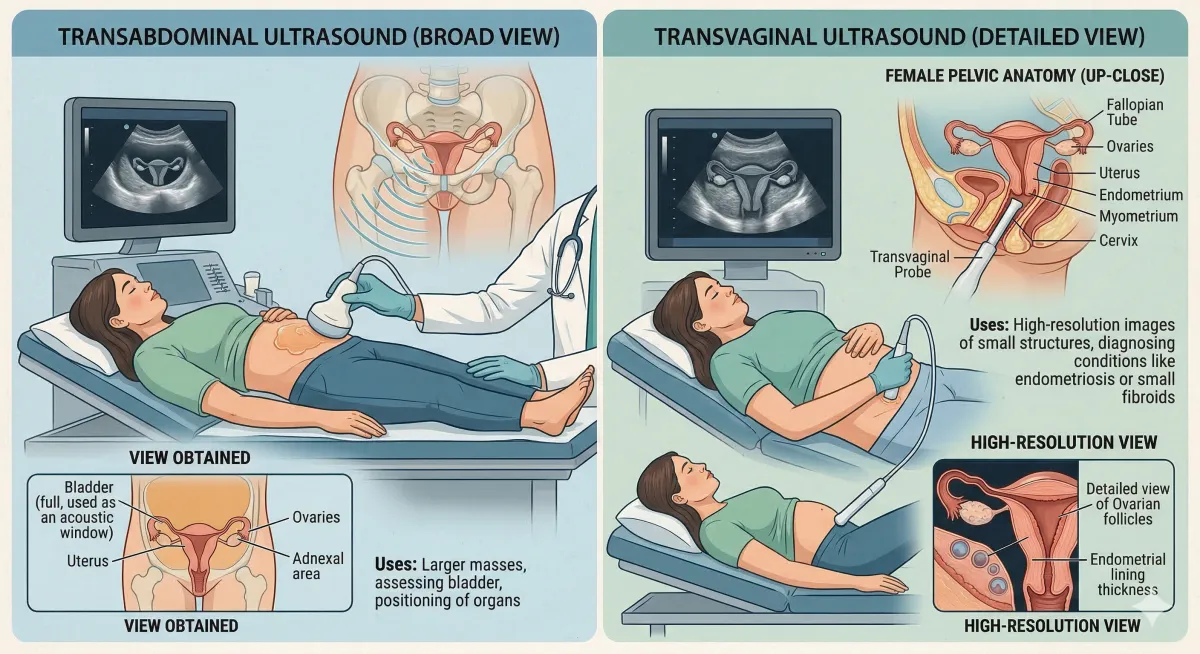
Depending on symptoms, doctors may use:
Transabdominal ultrasound (over the abdomen)
Transvaginal ultrasound (for closer, more detailed views)
This combination gives a clearer picture than most people expect.
Common Causes of Pelvic Pain Ultrasound Can Detect
This is where most people underestimate ultrasound—it’s not just “basic imaging.” It can reveal a wide range of conditions.
1. Ovarian Cysts
Fluid-filled sacs on the ovaries are one of the most common causes of pelvic pain.
Ultrasound helps doctors:
Confirm the presence of a cyst
Measure its size
Determine if it looks simple or complex
2. Uterine Fibroids
Fibroids are noncancerous growths in the uterus that can cause:
Pain
Pressure
Heavy periods
Ultrasound shows their:
Size
Location
Number
3. Endometriosis (Indirect Signs)
While ultrasound doesn’t always directly diagnose endometriosis, it can detect:
Endometriomas (ovarian cysts linked to endometriosis)
Pelvic abnormalities that raise suspicion
This helps guide further testing.
4. Pelvic Inflammatory Disease (PID)
Infections in the reproductive organs can cause severe pain.
Ultrasound may reveal:
Fluid buildup
Swelling of reproductive structures
5. Ectopic Pregnancy
This is a serious condition where a pregnancy develops outside the uterus.
Ultrasound is critical for:
Early detection
Preventing complications
6. Bladder or Urinary Issues
Sometimes pelvic pain isn’t reproductive—it’s urinary.
Ultrasound can help identify:
Bladder abnormalities
Retention issues
How Ultrasound Helps Doctors Make Decisions
Here’s the part most blogs skip: ultrasound isn’t just about “finding something”, it drives next steps.
Based on the results, doctors can:
Rule out serious conditions
Decide if further imaging (like MRI) is needed
Recommend treatment or monitoring
Refer to a specialist
Without imaging, treatment would be guesswork.
What to Expect During the Scan
If you’re going in for a pelvic ultrasound, the process is usually straightforward:
You may be asked to have a full bladder (for abdominal scans)
A gel is applied to help transmit sound waves
A handheld device (transducer) is moved over the area
For transvaginal scans, a small probe is gently inserted for clearer images
Most scans take 15–30 minutes, and results are often available quickly.
When Should You Consider a Pelvic Ultrasound?
You shouldn’t wait until the pain becomes unbearable.
Doctors typically recommend an ultrasound if you experience:
Persistent or recurring pelvic pain
Pain during periods or intercourse
Unexplained bloating or pressure
Irregular bleeding
Sudden, severe pelvic discomfort
Ignoring symptoms is where people go wrong—it delays diagnosis and can make treatment harder.
The Bottom Line
Unexplained pelvic pain isn’t something to brush off. It’s your body signaling that something needs attention.
Ultrasound gives doctors a clear, immediate, and safe way to investigate what’s happening inside your body without invasive procedures.
If you’ve been dealing with ongoing discomfort and don’t have answers yet, imaging could be the step that finally brings clarity.
For those seeking expert ultrasound services, Atlanta Ultrasound offers quick, efficient, and comprehensive scans. Our team of skilled professionals is dedicated to providing you with the clarity and care you need. Contact us today to schedule your ultrasound scan and take a decisive step towards understanding your health.
📍 Multiple locations in Metro Atlanta, GA
📞 Contact: 678-590-3300
🌐 Website: www.atlantaultrasound.com
Disclaimer: The content of this blog post, authored by a sonographer, is provided for educational and informational purposes only. It is not intended as medical advice, nor should it substitute for professional medical consultation, diagnosis, or treatment. Always seek the advice of your physician or other qualified health providers with any questions you may have regarding a medical condition or health concerns.