
Seeing Is Believing: The Benefits of Ultrasound for Patients and Providers
Constant Pelvic Pressure? Here’s What Might Be Happening
Constant Pelvic Pressure? Here’s What Might Be Happening
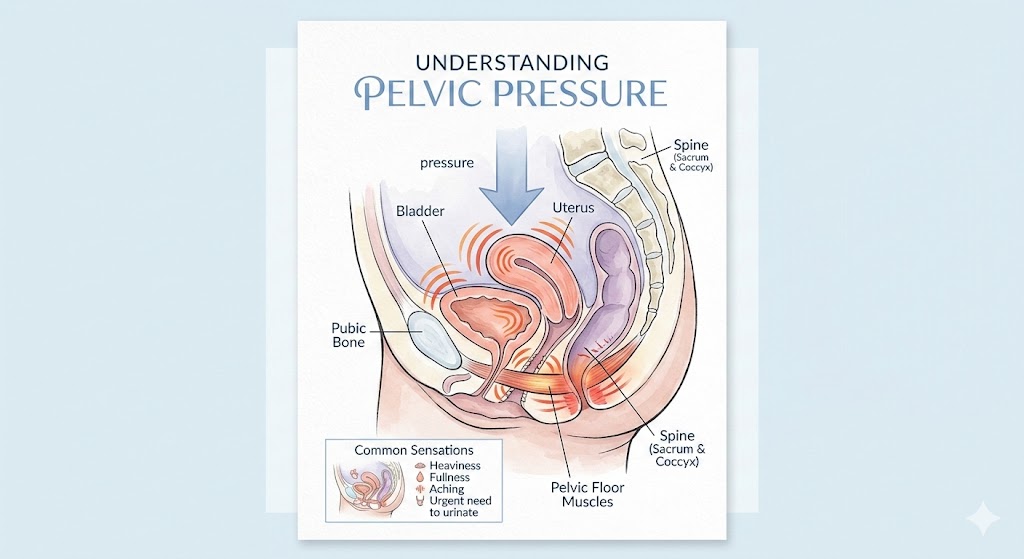
Pelvic pressure is one of those symptoms that can quietly take over your day. It may start as a mild heaviness in your lower abdomen, then slowly become something you notice when you sit, when you walk, or even when you are simply trying to focus. Many women describe it as a constant feeling of fullness, tightness, or a downward push in the pelvis. Because it is not always sharp pain, it can be easy to dismiss. The problem is that persistent pelvic pressure is your body’s way of signaling that something deserves attention.

Pelvic pressure is not a diagnosis. It is a symptom. It can come from the uterus, the ovaries, the bladder, the bowels, or the muscles and support structures of the pelvic floor. The sensation may feel similar across different conditions, which is why guessing usually leads to frustration. The key is understanding the most common causes and knowing when it is time to get checked.
Fibroids
Uterine fibroids are non-cancerous growths that develop in or on the uterus. They are extremely common, especially in women in their 30s and 40s.
When fibroids grow larger, they can press against nearby organs like the bladder or rectum. That pressure can create:
Pelvic heaviness
Frequent urination
Constipation
Lower back discomfort
The tricky part? Some women don’t know they have fibroids until symptoms become noticeable. A pelvic ultrasound can help identify them quickly and safely.

Ovarian Cysts
Ovarian cysts are fluid-filled sacs that develop on the ovaries. Many cysts are harmless and go away on their own. But larger cysts can cause:
One-sided pelvic pressure
Bloating
A dull ache that doesn’t disappear
If a cyst grows or twists, the pain can become severe. That’s when immediate medical attention is necessary.
Early Pregnancy
Pelvic pressure can sometimes be one of the earliest signs of pregnancy. As the uterus begins to expand, you may feel fullness or heaviness in the lower abdomen.
If you’ve missed a period or suspect pregnancy, an ultrasound can confirm what’s happening and check that everything is developing as it should.
Pelvic Organ Prolapse
This sounds scary, but let’s define it clearly.
Pelvic organ prolapse happens when the muscles and tissues supporting the pelvic organs weaken. This can allow the uterus, bladder, or rectum to shift downward.
Women often describe:
A feeling like something is “falling out”
Heaviness that worsens by the end of the day
Discomfort when standing for long periods
It’s more common after childbirth or during menopause, when hormonal changes affect tissue strength.
Infections or Inflammation
Pelvic inflammatory disease (PID) or other infections can cause persistent pressure along with:
Fever
Unusual discharge
Pain during intercourse
This is not something to wait out. Infection needs medical treatment.
Constipation (Yes, Really)
Sometimes the cause is less dramatic but still uncomfortable.
Severe constipation can create significant pelvic pressure because the rectum sits right behind the uterus. When it’s full, it pushes forward, creating heaviness and discomfort.
The body is mechanical. Organs share space. Pressure in one area affects another.
When Should You Take It Seriously?
Here’s the truth: constant pelvic pressure that lasts more than a few days is worth investigating.
Especially if you notice:
Increasing discomfort
Irregular bleeding
Sudden sharp pain
Fever
Changes in your menstrual cycle
Ignoring symptoms doesn’t make them disappear. It only delays clarity.
Why Ultrasound Matters
Ultrasound is one of the safest and most effective first steps in evaluating pelvic pressure. It allows providers to see the uterus, ovaries, and surrounding structures in real time.
No radiation. No surgery. Just answers. And answers reduce anxiety.
Your Body Is Not “Being Dramatic”
Women are often taught to minimize discomfort. To push through. To normalize symptoms.
But constant pelvic pressure is not something to brush off.
Your body communicates in sensations. Pressure is information.
The real power is not in guessing what’s wrong. It’s in getting clarity.
If you’ve been feeling persistent pelvic pressure, don’t sit in uncertainty. A simple evaluation can provide direction, reassurance, or a treatment plan that brings relief.
Clarity is better than assumption. Every time
For those seeking expert ultrasound services, Atlanta Ultrasound offers quick, efficient, and comprehensive scans. Our team of skilled professionals is dedicated to providing you with the clarity and care you need. Contact us today to schedule your ultrasound scan and take a decisive step towards understanding your health.
📍 Multiple locations in Metro Atlanta, GA
📞 Contact: 678-590-3300
🌐 Website: www.atlantaultrasound.com
Disclaimer: The content of this blog post, authored by a sonographer, is provided for educational and informational purposes only. It is not intended as medical advice, nor should it substitute for professional medical consultation, diagnosis, or treatment. Always seek the advice of your physician or other qualified health providers with any questions you may have regarding a medical condition or health concerns.