
Seeing Is Believing: The Benefits of Ultrasound for Patients and Providers
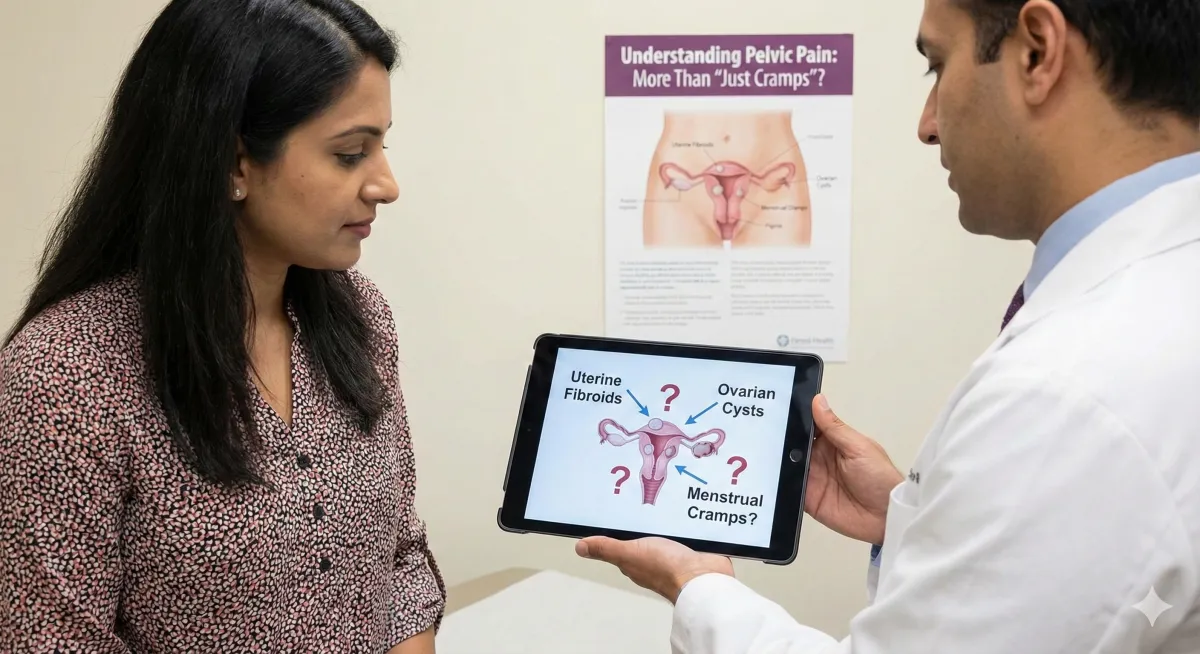
Fibroids, Ovarian Cysts, or “Just Cramps”? How Pelvic Ultrasound Helps Find the Real Problem
Fibroids, Ovarian Cysts, or “Just Cramps”? How Pelvic Ultrasound Helps Find the Real Problem
Pelvic pain has a special talent for being vague. One month it’s “just cramps.” The next month it’s sharp, heavy, bloated, or weirdly one-sided—and suddenly you’re Googling symptoms at 2 a.m.
Here’s the truth: many different conditions feel the same at first. That’s why guessing (or being dismissed) can drag things out for months or years. A pelvic ultrasound is one of the fastest, safest ways to move from “maybe” to actual answers without radiation.
This article breaks down what pelvic ultrasound can reveal when you’re dealing with cramps, pressure, heavy bleeding, or pelvic discomfort—and how it helps your provider tell the difference between fibroids, ovarian cysts, and other common causes.
Quick note: This is general education, not medical advice. If you’re having severe pain, fainting, fever, or heavy bleeding, seek urgent care.

When “Just Cramps” isn’t just cramps
Cramps can be normal especially around your period. But cramps that are new, worsening, or disruptive deserve a closer look.
Common red flags that often lead providers to order a pelvic ultrasound:
Periods that are heavier than usual or last longer than 7 days
Pelvic pressure, fullness, or “something feels off”
Pain that’s one-sided, sharp, or sudden
Pain during sex
Bleeding between periods
Trouble emptying your bladder, frequent urination, or constipation (yes—pelvic issues can press on nearby organs)
Fertility concerns or recurrent pregnancy loss evaluation (depending on your care plan)

What pelvic ultrasound actually shows
Pelvic ultrasound uses sound waves to create images of your pelvic organs, commonly including:
Uterus
Endometrium (uterine lining)
Ovaries
Sometimes the cervix and surrounding pelvic structures
It can help your provider check:
Size, shape, and position of organs
Masses or growths (like fibroids)
Fluid-filled sacs (like cysts)
Thickening or irregularities of the uterine lining
Signs that help guide next steps (monitoring, medication, or referral)
Fibroids vs ovarian cysts vs cramps: how they differ
1) Fibroids (uterine fibroids)
Fibroids are noncancerous growths in or on the uterus. They’re common and can range from tiny to “why do I feel pregnant?” size.
Symptoms that often point toward fibroids:
Heavy periods or clots
Longer periods
Pelvic pressure or fullness
Lower back pain
Frequent urination (from pressure on the bladder)
Fertility or pregnancy-related concerns (depending on location and size)
How ultrasound helps:
A pelvic ultrasound can often identify:
Presence of fibroids
Their size
Their location (location matters a lot for symptoms and treatment options)
2) Ovarian cysts
An ovarian cyst is typically a fluid-filled sac on an ovary. Many cysts are functional (related to the menstrual cycle) and resolve on their own. Some persist, grow, bleed, or twist (rare but urgent).
Symptoms that often point toward cysts:
One-sided pelvic pain
Pain that comes and goes
Pain that worsens with exercise or sex
Bloating or heaviness
Sudden sharp pain (especially if ruptured)
How ultrasound helps:
Ultrasound can help determine:
If a cyst is present
Its size
Whether it looks simple (fluid-filled) or complex (features your provider may want to evaluate closely)
Whether follow-up imaging is needed
Important: Ultrasound can’t diagnose everything alone—but it’s a powerful “first look” that guides what happens next.
3) “Just cramps” (primary dysmenorrhea)
Some people have painful periods without an underlying condition—this is often called primary dysmenorrhea. It’s real pain, and it can be intense.
Clues it may be primary cramps:
Pain starts shortly before or at the beginning of your period
Pain improves after day 1–2
No new symptoms over time
No heavy bleeding or major cycle changes
How ultrasound helps:
Sometimes ultrasound is used to rule out structural causes (fibroids, cysts, uterine abnormalities). If imaging looks normal, that information is still valuable—it helps your provider focus on symptom management and other possible causes.
Other issues pelvic ultrasound can help evaluate
Depending on symptoms and clinical context, pelvic ultrasound may also help assess signs related to:
Thickened or irregular uterine lining (your provider interprets this based on age, cycle timing, and history)
Adenomyosis (sometimes suggested by ultrasound features, though it can be harder to confirm)
Pelvic fluid collections
Pregnancy-related concerns (when relevant)
Transabdominal vs transvaginal ultrasound: what to expect
Transabdominal pelvic ultrasound
Probe moves over your lower belly
Usually requires a full bladder (it helps create a “window” to see pelvic organs more clearly)
Great for a broad overview
Transvaginal pelvic ultrasound
A slender probe is inserted into the vagina (with a protective cover)
Usually best with an empty bladder
Often provides clearer, closer detail of the uterus, ovaries, and lining
Your provider may order one or both depending on symptoms and what they need to see.
How to prepare (simple, but do it right)
Preparation depends on the type of exam:
Transabdominal: you may be asked to drink water beforehand and avoid peeing until after imaging.
Transvaginal: you may be asked to empty your bladder first.
Wear comfortable two-piece clothing if possible. And bring:
Your symptom notes (when pain happens, where it is, cycle timing)
Medication list
Any history of fibroids, cysts, or prior imaging reports if you have them
What happens after the ultrasound
Ultrasound results are interpreted by a radiologist or qualified clinician and sent to your ordering provider, who will connect the dots with:
Your symptoms
Cycle timing
Labs (if needed)
Physical exam and history
Possible next steps might include:
Watchful waiting + follow-up imaging
Medication or hormonal management
Referral to OB-GYN or specialist
Further testing if something needs deeper evaluation
When pelvic pain is an emergency
Don’t “tough it out” if you have:
Sudden, severe pelvic pain
Fainting, dizziness, or shoulder pain
Heavy bleeding soaking pads rapidly
Fever with pelvic pain
Positive pregnancy test with pain/bleeding
Those can signal urgent conditions that need immediate care.
FAQs
Can pelvic ultrasound detect everything?
No. It’s excellent for many structural causes (fibroids, cysts, uterine changes), but some conditions may need other tests or clinical evaluation to confirm.
Does it hurt?
Transabdominal is usually painless. Transvaginal may feel uncomfortable for some people, especially if you’re already in pain, but it should not be sharply painful. Tell the sonographer if you’re uncomfortable.
Is it safe?
Ultrasound does not use ionizing radiation. It’s widely used and generally considered safe when performed appropriately.
For those seeking expert ultrasound services, Atlanta Ultrasound offers quick, efficient, and comprehensive scans. Our team of skilled professionals is dedicated to providing you with the clarity and care you need.
Contact us today to schedule your ultrasound scan and take a decisive step towards understanding your health.
📍 Multiple locations in Metro Atlanta, GA
📞 Contact: 678-590-3300
🌐 Website:www.atlantaultrasound.com
Disclaimer: The content of this blog post, authored by a sonographer, is provided for educational and informational purposes only. It is not intended as medical advice, nor should it substitute for professional medical consultation, diagnosis, or treatment. Always seek the advice of your physician or other qualified health providers with any questions you may have regarding a medical condition or health concerns.