
Seeing Is Believing: The Benefits of Ultrasound for Patients and Providers
How Breast Ultrasound Helps Differentiate Between Cysts and Solid Masses
How Breast Ultrasound Helps Differentiate Between Cysts and Solid Masses
Breasts are wonderfully complex pieces of biological engineering. They contain fat, glands, ducts, connective tissue, lymph vessels and occasionally little surprises that send people into a spiral of Google searches at 2 a.m. When a lump shows up, the mind often jumps straight to the worst-case scenario. Science, thankfully, prefers evidence over panic. One of the most useful tools doctors use to investigate breast lumps is the breast ultrasound.
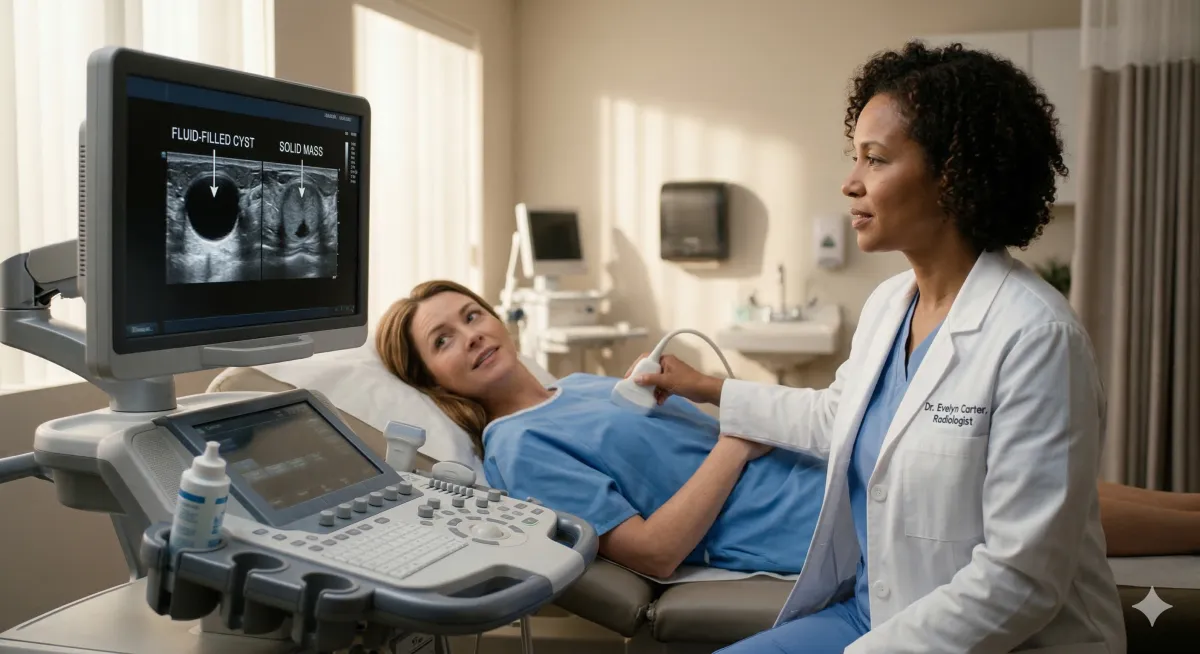
A breast ultrasound is particularly good at answering a very important question: Is this lump a cyst filled with fluid, or a solid mass made of tissue?
That distinction matters enormously.
Why Identifying the Type of Lump Matters
Not all breast lumps are dangerous. In fact, many are completely benign (non-cancerous). Two of the most common findings are:
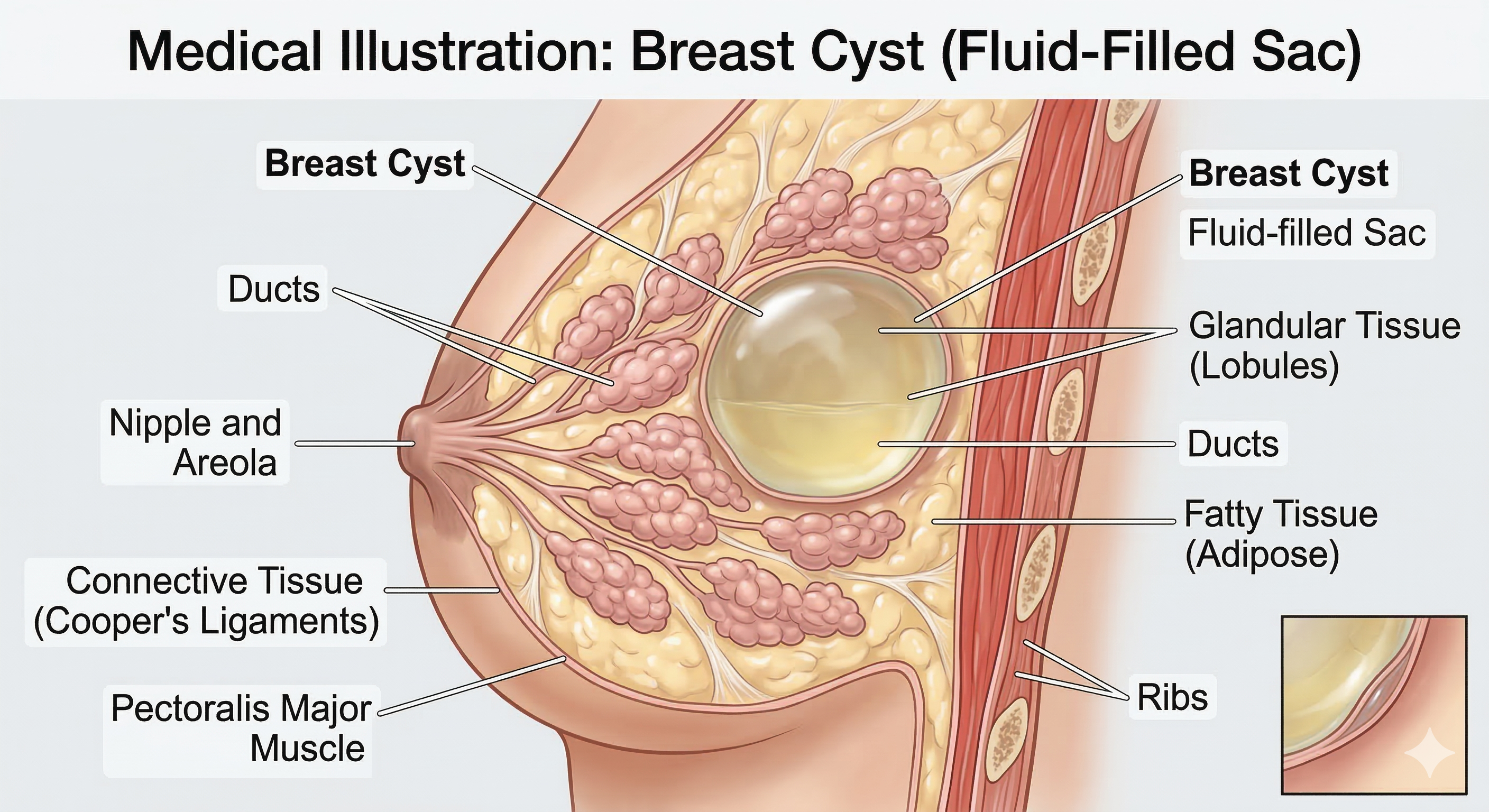
Breast cysts – fluid-filled sacs that are usually harmless
Solid masses – tissue growths that may be benign or require further evaluation
Because cysts and solid masses behave differently, doctors need imaging tools that reveal what the lump is made of. Mammograms sometimes detect the lump first, but ultrasound excels at revealing the internal structure.
Think of ultrasound as a way of “seeing with sound.”
How Breast Ultrasound Works
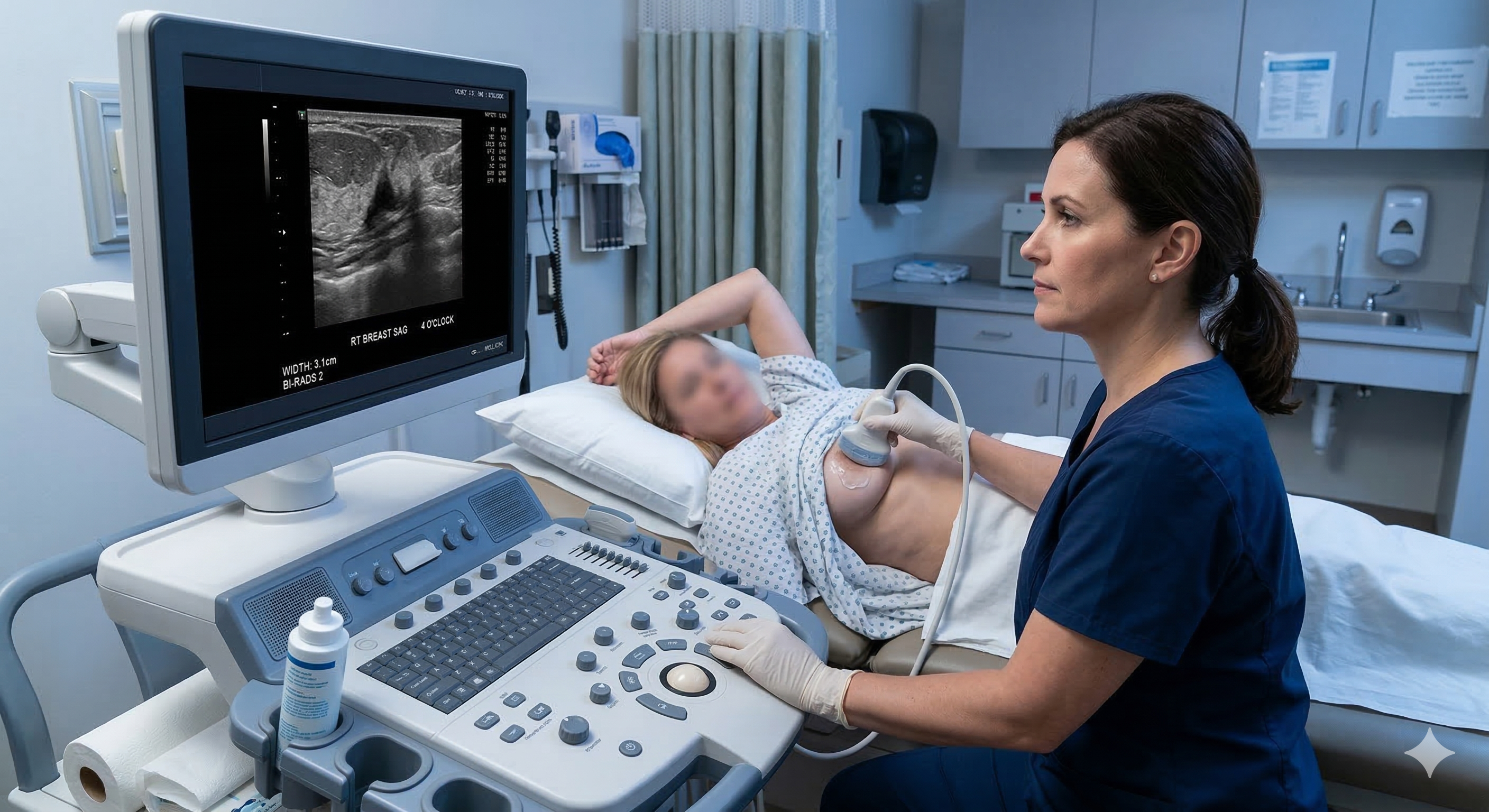
Ultrasound uses high-frequency sound waves that bounce off internal structures. A handheld device called a transducer sends these sound waves into the breast tissue. As the waves reflect back, a computer converts them into real-time images.
Different materials reflect sound waves differently.
Fluid, fat, and dense tissue each produce distinctive patterns on the ultrasound screen. This allows healthcare providers to analyze the lump's characteristics without any radiation or invasive procedures.
How Ultrasound Identifies Breast Cysts
Cysts are usually the simplest findings on ultrasound. Because they are filled with fluid, they interact with sound waves in a very predictable way.
Typical ultrasound features of a cyst include:
1. Completely dark appearance
Fluid allows sound waves to pass through easily, so cysts appear black (anechoic) on ultrasound images.
2. Smooth, well-defined borders
Cysts usually have round or oval shapes with clean edges.
3. Posterior acoustic enhancement
Because sound travels easily through fluid, the area behind the cyst appears brighter on the image.
These characteristics help doctors confidently identify simple cysts, which often require no treatment unless they cause discomfort.
How Ultrasound Identifies Solid Masses
Solid masses behave very differently under ultrasound.
Instead of allowing sound waves to pass through, solid tissue reflects or scatters the sound, creating internal patterns on the image.
Common ultrasound characteristics of solid masses include:
Internal echoes
Unlike cysts, solid masses appear gray or white, because tissue reflects sound waves.
Irregular or complex borders
Some solid masses may have uneven or indistinct edges.
Shadowing behind the mass
Dense tissue may block sound waves, creating a darker area behind the mass.
These patterns help radiologists determine whether the lump appears benign, suspicious, or indeterminate, guiding the next step in care.
When a Breast Ultrasound Is Recommended
Doctors often recommend breast ultrasound in several situations, including:
Evaluating a lump found during a breast exam
Investigating an abnormality seen on a mammogram
Examining dense breast tissue where mammography is less clear
Distinguishing between fluid-filled cysts and solid growths
For many patients, ultrasound provides immediate reassurance when a lump turns out to be a harmless cyst.
What Happens After the Ultrasound
Once the images are reviewed, one of several outcomes may occur:
Simple cyst identified: No further action may be needed
Benign-appearing solid mass: Follow-up imaging may be recommended
Suspicious mass: A biopsy may be suggested for further evaluation
Ultrasound does not diagnose cancer by itself, but it plays a crucial role in determining whether additional testing is necessary.
The Bottom Line
Breast lumps are common, but understanding what they are made of is essential. Breast ultrasound provides a safe, painless, and highly effective way to distinguish fluid-filled cysts from solid masses, helping doctors make informed decisions about next steps.
In many cases, this technology transforms uncertainty into clarity, something every patient deserves when it comes to their health.
For those seeking expert ultrasound services, Atlanta Ultrasound offers quick, efficient, and comprehensive scans. Our team of skilled professionals is dedicated to providing you with the clarity and care you need. Contact us today to schedule your ultrasound scan and take a decisive step towards understanding your health.
📍 Multiple locations in Metro Atlanta, GA
📞 Contact: 678-590-3300
🌐 Website: www.atlantaultrasound.com
Disclaimer: The content of this blog post, authored by a sonographer, is provided for educational and informational purposes only. It is not intended as medical advice, nor should it substitute for professional medical consultation, diagnosis, or treatment. Always seek the advice of your physician or other qualified health providers with any questions you may have regarding a medical condition or health concerns.