
Seeing Is Believing: The Benefits of Ultrasound for Patients and Providers

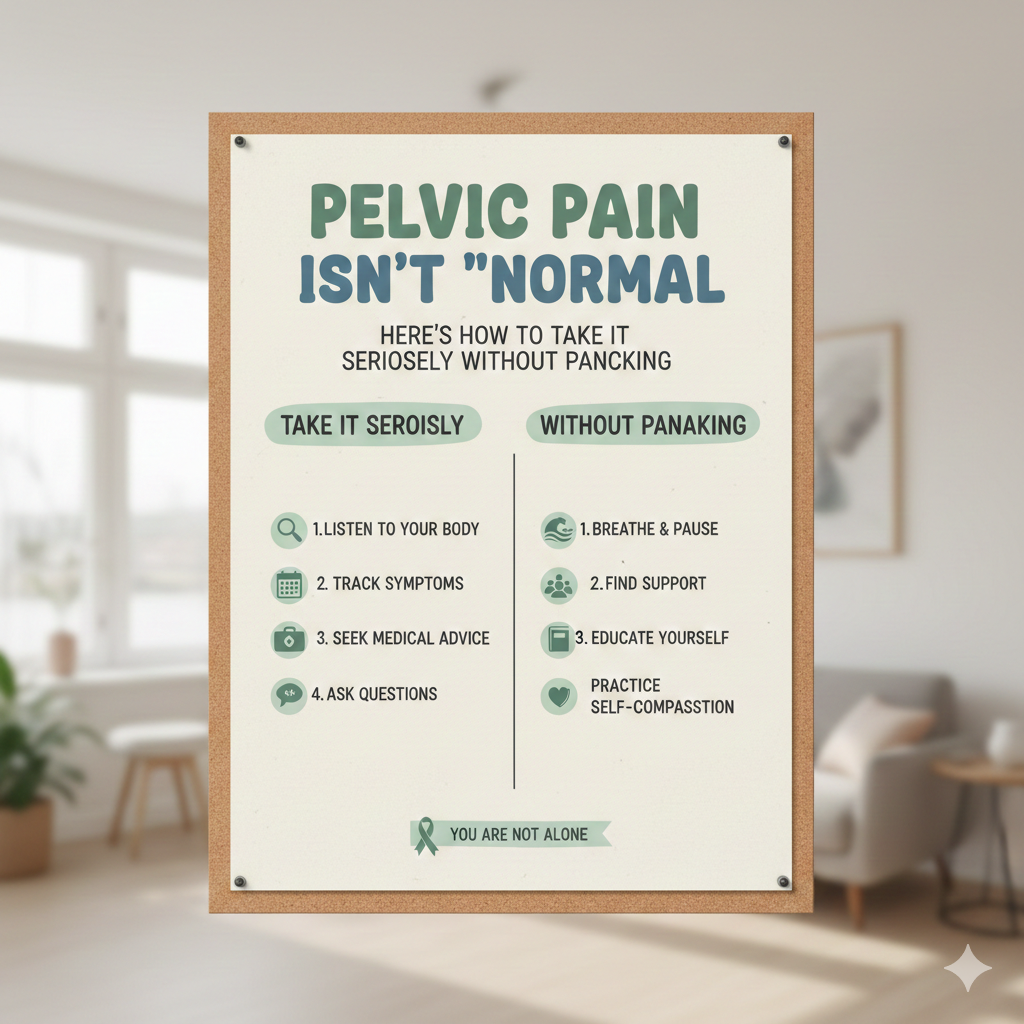
Pelvic Pain Isn’t “Normal” — Here’s How to Take It Seriously Without Panicking
Pelvic Pain Isn’t “Normal” : Here’s How to Take It Seriously Without Panicking
Pelvic Pain Isn’t “Normal” — Here’s How to Take It Seriously Without PanickingPelvic pain has a talent for getting minimized. People shrug it off as “period pain,” “stress,” “maybe gas,” or “it’ll pass.” That casualness is exactly how treatable problems turn into long, exhausting sagas.
Pelvic pain is your body waving a flag. The flag doesn’t always mean danger — but it always means pay attention. The goal isn’t to self-diagnose from a blog. The goal is to recognize patterns, spot red flags fast, and show up to care with clarity.
First: what counts as pelvic pain?
Pelvic pain is discomfort below the belly button and between the hips. It can feel sharp, dull, crampy, burning, heavy, or like pressure. It can radiate into the lower back, hips, or thighs.
Doctors often think about it in two buckets:
Acute pelvic pain: sudden or recent onset (hours to days), sometimes intense and urgent.
Chronic pelvic pain: pain lasting 6 months or longer, often with multiple overlapping causes.
Both matter. Acute pain can be an emergency. Chronic pain can quietly wreck your quality of life if you keep “toughing it out.”
Red flags: when pelvic pain is an emergency
This part is not negotiable. If any of these are true, seek urgent care / emergency evaluation now:
You might be pregnant (missed period, positive test, or even “not sure”) and you have pelvic pain ± bleeding. Ectopic pregnancy can start with pelvic pain and abnormal bleeding and can become life-threatening.
Sudden, severe one-sided pain especially with nausea/vomiting (possible ovarian torsion).
Fainting, dizziness, shoulder pain, weakness, or feeling like you might pass out (possible internal bleeding, including ruptured ectopic pregnancy).
Fever, chills, or feeling very unwell with pelvic pain (infection needs fast evaluation).
Heavy vaginal bleeding, especially soaking pads quickly or passing large clots.
Severe pain that escalates rapidly or doesn’t improve at all.
Brutal truth: waiting “to see if it goes away” is not bravery. It’s gambling.

The most common causes (and what they tend to feel like)
Pelvic pain is tricky because the pelvis is a crowded neighborhood: reproductive organs, bladder, bowel, muscles, nerves — and they can all refer pain into the same area.
1) Period-related pain (including endometriosis)
Mild cramps that respond to rest or medication can be normal. But pain that’s severe, worsening over time, causing missed work/school, or happening outside your period is not something to normalize.
Endometriosis is a common culprit in chronic pelvic pain — and it’s often dismissed for years because symptoms overlap with “normal” cramps. (This is one reason tracking patterns matters.)
2) Ovarian cysts (including rupture)
Cysts are common and often harmless, but they can cause pain or pressure. A cyst that ruptures can cause sudden sharp pain. In acute pelvic pain, clinicians also think about urgent causes like ruptured ovarian cyst and torsion.
3) Pelvic Inflammatory Disease (PID)
PID is an infection of the upper reproductive organs and can cause pelvic pain, pain during sex, irregular bleeding, and unusual discharge — but here’s the nasty part: PID can be subtle or hard to diagnose, and delays in treatment can lead to long-term damage and chronic pain.
If pelvic pain is paired with discharge, fever, pain with sex, or bleeding after sex — don’t play games. Get checked.
4) Urinary causes (UTI, bladder pain syndrome)
Burning when you pee, urgency, frequent urination, or pain that worsens as the bladder fills can point toward urinary sources. Pelvic pain isn’t always reproductive — the bladder is right there.
5) Digestive causes (IBS, constipation, appendicitis)
The bowel can cause crampy pelvic pain, bloating, or pain linked to meals and bowel movements. And yes — not-fun things like appendicitis can start as lower abdominal/pelvic pain. That’s why sudden severe pain deserves real evaluation, not vibes.
6) Muscle, nerve, and pelvic floor issues
Sometimes the problem isn’t an organ — it’s the pelvic floor muscles or nerves getting tight, irritated, or overworked. This can feel like aching, burning, pressure, pain with sex, or pain that flares with stress and sitting.
This is one reason people bounce between doctors for years: pelvic pain can be multi-factorial.
7) Pregnancy-related causes (including ectopic pregnancy)
If pregnancy is even a possibility, it changes the urgency and the differential. Ectopic pregnancy can begin with pelvic pain and abnormal bleeding and can become dangerous if it ruptures.
Why pelvic pain gets missed (and how you stop that from happening)
Pelvic pain is often dismissed because:
Symptoms overlap (period pain vs endometriosis vs cyst vs bowel vs bladder)
Infections like PID can be subtle and underdiagnosed
People under-report pain (“I don’t want to seem dramatic”)
Here’s how you cut through the fog: bring data.
A simple 7-day tracking checklist (do this before your appointment)
Write this down in your phone notes:
When did it start? Sudden or gradual?
Exact location (center, left, right) + does it radiate?
Pain type (sharp, dull, burning, cramping, pressure)
Pain score 0–10 (yes, do it)
Triggers: period, sex, urination, bowel movement, exercise, stress, sitting
Associated symptoms: fever, nausea/vomiting, discharge, bleeding, urinary symptoms, constipation/diarrhea
What helps: heat, rest, meds (and which ones)
This turns “I’ve been having pain” into something a clinician can actually act on.
What to expect when you seek care (so you’re not blindsided)
For acute pelvic pain, clinicians prioritize ruling out urgent conditions like ectopic pregnancy, torsion, PID, ruptured cyst.
Common steps include:
Pregnancy test (even if you’re sure it’s impossible — this is standard because it’s high-stakes)
Urine tests (UTI signs)
STI testing if relevant (because PID matters and can be subtle)
Pelvic exam (sometimes)
Imaging (often ultrasound; sometimes additional imaging depending on symptoms)
Not every case needs everything — but you should expect your provider to rule out “can’t-miss” diagnoses first.
What you can do right now (safe, non-stupid steps)
While you’re arranging care (or if you’ve been evaluated and told it’s not an emergency), here are generally safe moves:
Heat (heating pad/warm bath) for muscle spasm/cramps
Hydration and gentle movement if constipation is a factor
Over-the-counter pain relief only if it’s safe for you (avoid if you have kidney disease, ulcers, anticoagulants, pregnancy concerns, etc.)
Avoid anything that could worsen irritation (new scented products, douching — just don’t)
And one more hard truth: if you’re escalating, vomiting, faint, feverish, or possibly pregnant — stop trying home fixes and go in.
How to advocate for yourself (without becoming “difficult”)
You don’t need to be aggressive. You need to be precise.
Use lines like:
“My pain is limiting my daily function. I need to rule out urgent causes.”
“Pregnancy is possible / not possible because ___ (but I understand a test is standard).”
“I’m worried about PID / torsion / ectopic because of ___ symptoms.”
“If tests are normal, what’s the next step for chronic pelvic pain evaluation?”
Chronic pelvic pain often has more than one cause, and treatment may require a plan — not a single test.
Bottom line
Pelvic pain is common. That does not make it trivial.
Treat it like a signal:
Urgent symptoms? Get urgent care.
Recurring or persistent symptoms? Track patterns and get evaluated.
Dismissed repeatedly? Bring data, escalate thoughtfully, and keep going until you get real answers.
For those seeking expert ultrasound services, Atlanta Ultrasound offers quick, efficient, and comprehensive scans. Our team of skilled professionals is dedicated to providing you with the clarity and care you need.
Contact us today to schedule your ultrasound scan and take a decisive step towards understanding your health.
📍 Multiple locations in Metro Atlanta, GA
📞 Contact: 678-590-3300
🌐 Website:www.atlantaultrasound.com
Disclaimer: The content of this blog post, authored by a sonographer, is provided for educational and informational purposes only. It is not intended as medical advice, nor should it substitute for professional medical consultation, diagnosis, or treatment. Always seek the advice of your physician or other qualified health providers with any questions you may have regarding a medical condition or health concerns.