
Seeing Is Believing: The Benefits of Ultrasound for Patients and Providers
ECG vs. Echocardiogram: What’s the Difference and When Do You Need Each Test?
ECG vs. Echocardiogram: What’s the Difference and When Do You Need Each Test?
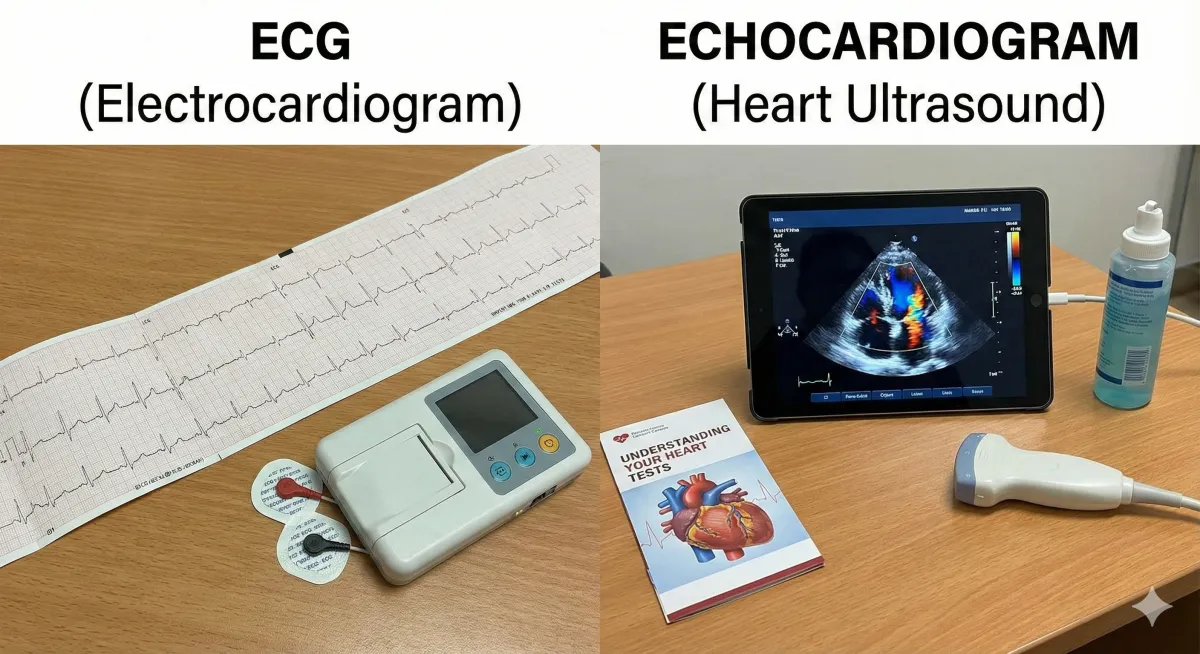
Heart tests have a branding problem. People hear “ECG/EKG” and “echo” and assume they’re basically the same thing. They’re not. One tracks your heart’s electrical activity. The other takes moving ultrasound images of your heart’s structure and pumping.
If you understand that one sentence, you’re already ahead of most Googlers at 2 a.m.

What is an ECG (EKG)?
An electrocardiogram (ECG or EKG) is a quick test that records the electrical signals in your heart using small sticky electrodes placed on your skin.
What an ECG is good at detecting
An ECG can help your provider evaluate things like:
Signs of a current or past heart attack/heart damage (depending on the pattern)
Overall rhythm and rate issues that may explain symptoms like palpitations, dizziness, or chest discomfort
What it doesn’t show
An ECG does not show the heart’s valves opening and closing, blood moving through chambers, or how strongly the heart muscle is pumping. That’s echo territory.
What is an Echocardiogram?
An echocardiogram (often called an “echo”) is an ultrasound test that creates moving pictures of your heart to assess its structure and function—how it looks and how it works.
What an echocardiogram is good at detecting
An echo can help evaluate:
Cardiomyopathy (heart muscle disease)
Heart chamber size, pumping function, and (with Doppler) how blood flows through the heart

Common types you might hear about (without the jargon headache)
Transthoracic echo (TTE): the standard echo done through the chest wall
Transesophageal echo (TEE): a more detailed echo done using a probe down the throat (typically hospital/specialty setting)
Doppler / Color Doppler: measures direction and speed of blood flow
The simplest way to remember the difference
TestWhat it measuresWhat it showsTypical use-caseECG / EKGElectrical signalsRhythm patterns (a “wiring” readout)Palpitations, rhythm checks, heart attack clues EchocardiogramUltrasound imagingValves, chambers, pumping, blood flowMurmurs, valve disease, heart function, cardiomyopathy
When do you need an ECG?
You’re more likely to get an ECG when your provider is focused on electrical/rhythm questions, like:
You feel fluttering, racing, or skipping beats
You’ve had dizziness or near-fainting
You have symptoms that could suggest a heart rhythm issue
Your provider wants a baseline rhythm tracing before certain treatments
When do you need an echocardiogram?
You’re more likely to get an echo when your provider is focused on structure + pumping questions, like:
A provider hears a heart murmur
There’s concern about valve disease
You have unexplained shortness of breath or swelling and they want to assess heart function
You need a clearer look at how well your heart is pumping or how blood is moving through it
Do people ever need both tests?
All the time. And it’s not “over-testing”—it’s complementary information.
The ECG tells your provider how your heart’s electrical system is behaving. The echo tells your provider how your heart’s muscle and valves are functioning.
Same organ. Two totally different lenses.
What to expect during each test
ECG
Echocardiogram (standard TTE)
Gel on chest + a handheld probe (transducer)
You may be asked to turn slightly or hold your breath briefly
A quick safety note (because heart symptoms can be serious)
If you have chest pain, trouble breathing, fainting, or sudden severe symptoms, treat it as urgent and seek emergency care. Online articles are useful—right up until they aren’t.
Bottom line
Get an ECG when the question is: “Is the heart’s rhythm/electrical system acting weird?”
Get an echocardiogram when the question is: “Is the heart’s structure, valves, or pumping function normal?”
If your provider orders an echocardiogram, a dedicated imaging clinic can help you schedule the study and ensure the images are captured clearly for interpretation.
FAQ
Is an echocardiogram the same as an ECG/EKG?
No. ECG = electrical signals. Echo = ultrasound images.
Which test is “better”?
Neither. They answer different questions—many patients need both.
Can an ECG detect blocked arteries?
An ECG can sometimes show patterns that raise concern, but it doesn’t directly visualize arteries or valves. It’s one piece of the puzzle.
Can an echocardiogram detect arrhythmias?
Echo can sometimes suggest rhythm-related issues during the exam, but diagnosing arrhythmias is primarily ECG territory.
For those seeking expert ultrasound services, Atlanta Ultrasound offers quick, efficient, and comprehensive scans. Our team of skilled professionals is dedicated to providing you with the clarity and care you need.
Contact us today to schedule your ultrasound scan and take a decisive step towards understanding your health.
📍 Multiple locations in Metro Atlanta, GA
📞 Contact: 678-590-3300
🌐 Website:www.atlantaultrasound.com
Disclaimer: The content of this blog post, authored by a sonographer, is provided for educational and informational purposes only. It is not intended as medical advice, nor should it substitute for professional medical consultation, diagnosis, or treatment. Always seek the advice of your physician or other qualified health providers with any questions you may have regarding a medical condition or health concerns.