
Seeing Is Believing: The Benefits of Ultrasound for Patients and Providers
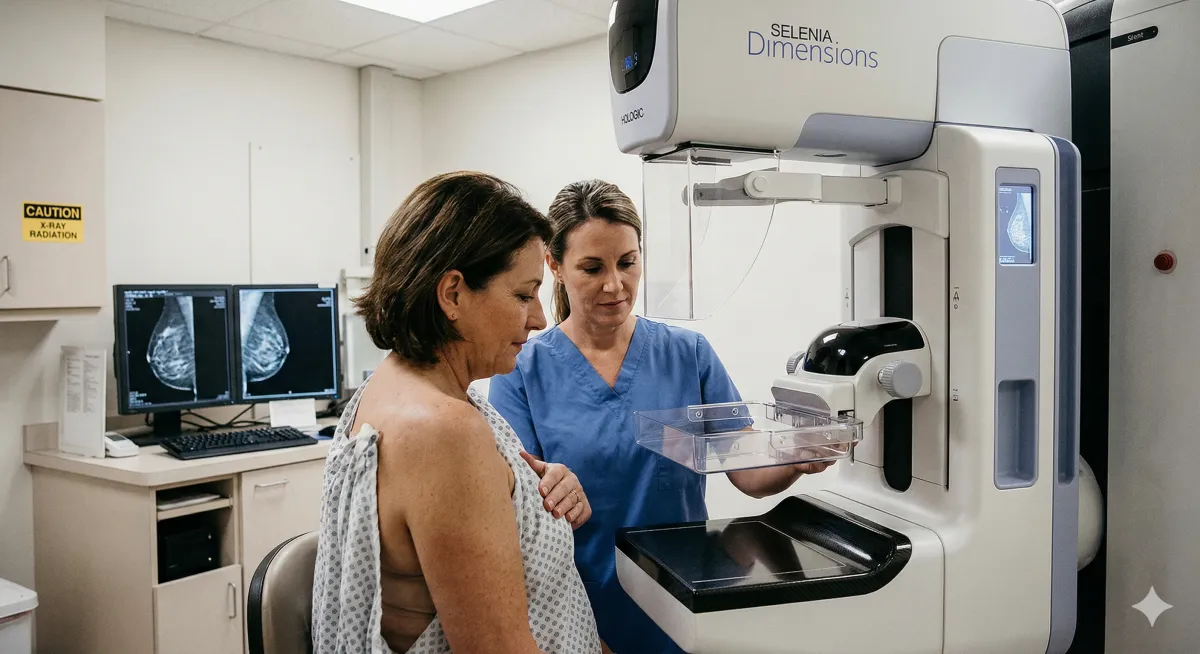
Breast Swelling or Tenderness: When Imaging Can Help
Breast Swelling or Tenderness: When Imaging Can Help
Breast swelling or tenderness is something many people experience at some point—and most of the time, it’s completely normal. But here’s the truth: not every case should be brushed off or ignored.
The real problem isn’t the symptom. It’s the guesswork people rely on instead of getting clarity.
Let’s break this down properly.

What Breast Swelling or Tenderness Actually Means
Breast tissue is highly sensitive to hormonal changes, which is why swelling or tenderness can show up during:
Menstrual cycles
Pregnancy
Breastfeeding
Hormonal medications (like birth control)
That’s the expected category.
But here’s where people get it wrong—they assume every case falls into that bucket.
It doesn’t.
When It’s Probably Normal (But Still Worth Monitoring)
You’re likely dealing with something benign if:
The tenderness comes and goes with your cycle
Both breasts feel similar
There’s no lump or skin change
The discomfort is mild and predictable
Still, “probably normal” is not the same as “ignore it forever.”
If it keeps happening or worsens, you stop guessing and start checking.
When You Need to Stop Waiting and Get Imaging
This is where discipline matters. If you notice any of these, don’t delay:
1. Persistent or Worsening Pain
Pain that doesn’t follow your cycle or keeps getting worse is not something to “watch and see.”
2. One-Sided Swelling
If one breast feels noticeably different from the other, that asymmetry needs evaluation.
3. A Lump or Thickened Area
Even if it’s painless. Especially if it’s new.
4. Skin Changes
Redness
Dimpling
Warmth
Texture changes (like orange peel skin)
5. Nipple Changes
Discharge (especially bloody or clear)
Inversion (turning inward)
Sudden sensitivity changes
At this point, you’re no longer in “maybe it’s nothing” territory.
Why Imaging Matters (And Why Guessing Is a Mistake)
Here’s the reality: your hands can’t see inside tissue.
Imaging can.
A breast ultrasound is one of the most effective first steps because it:
Differentiates between fluid-filled cysts and solid masses
Detects abnormalities that aren’t easily felt
Helps guide next steps with precision
It’s fast, non-invasive, and gives you clarity instead of anxiety.
And clarity is power.
What Imaging Can Actually Reveal
When you stop guessing and get imaging, you’re looking for answers like:
Cysts (very common and usually harmless)
Fibroadenomas (benign solid lumps)
Infections or abscesses
Hormonal tissue changes
Or in rare cases, early signs that need further evaluation
The key is this: you move from uncertainty to informed action.
The Mistake Most People Make
They wait.
They Google.
They ask friends.
They hope it goes away.
That’s not strategy—that’s avoidance.
And avoidance delays answers.
The Right Approach
Notice changes early
Don’t normalize what feels different
Use imaging to confirm, not assume
Take action based on facts, not fear
Breast swelling or tenderness isn’t automatically a problem—but ignoring persistent or unusual symptoms is.
If something feels off, your job isn’t to guess.
Your job is to get clarity and move forward with confidence.
That’s how you stay in control of your health—not by waiting, but by acting.