
Seeing Is Believing: The Benefits of Ultrasound for Patients and Providers
Kidney Stone Symptoms in Men vs. Women: Is There a Difference?
Kidney Stone Symptoms in Men vs. Women: Is There a Difference?
Kidney stones are small, hard deposits that form in the kidneys when minerals and salts build up in the urine. They can affect both men and women and are known for causing sudden, intense pain. While the main symptoms are often similar, there are a few differences in how men and women may experience them.
What Are Kidney Stones?
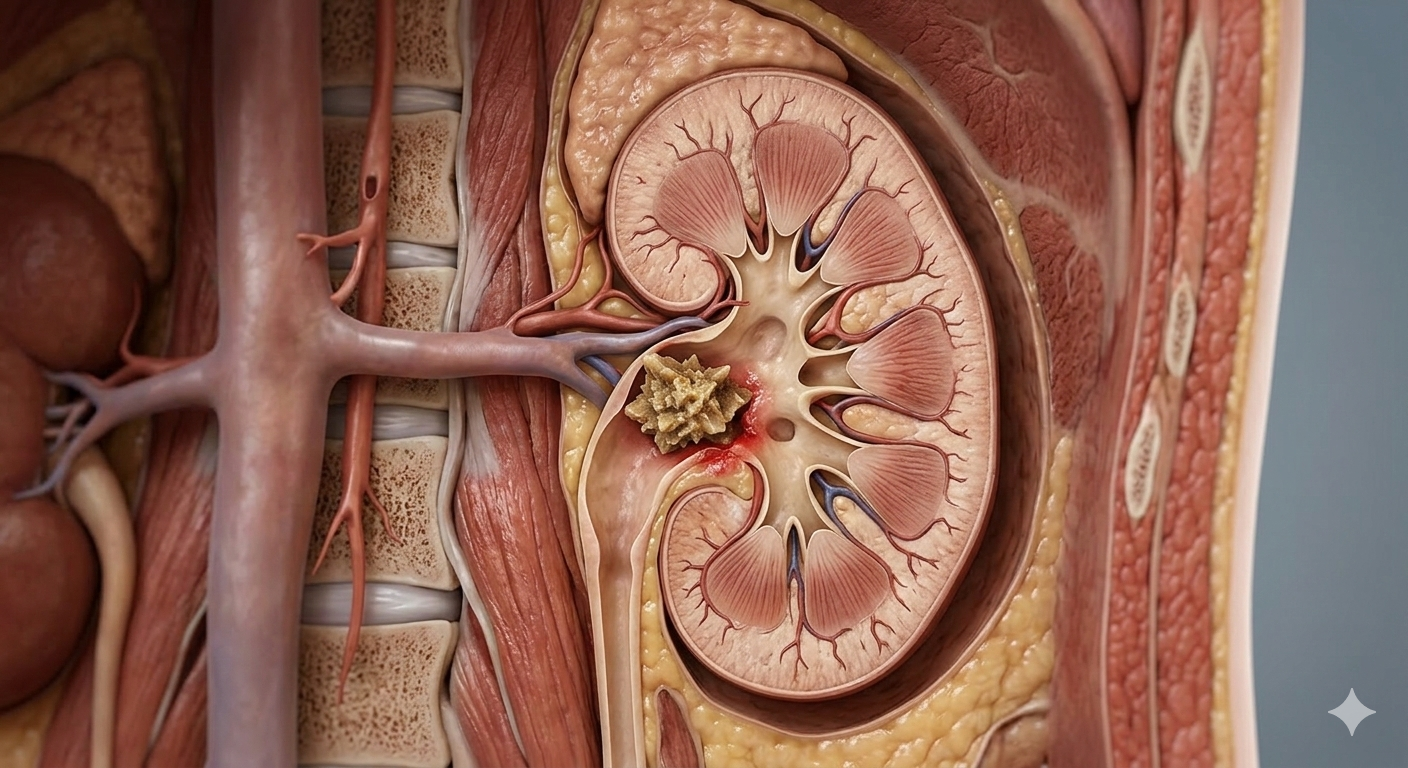
Kidney stones develop when substances in the urine, such as calcium, oxalate, or uric acid, become too concentrated and begin to form crystals. Over time, those crystals can join together and grow into stones. Some are small enough to pass on their own, while others can become stuck in the urinary tract and cause serious discomfort.
Common Symptoms of Kidney Stones
Both men and women may experience many of the same core symptoms, including:
Severe pain in the back, side, lower abdomen, or groin
Pain that comes in waves and may change in intensity
Burning or pain during urination
Frequent urge to urinate
Blood in the urine
Cloudy or foul-smelling urine
Nausea or vomiting
Fever and chills if an infection is present
These symptoms usually depend more on where the stone is located than on gender alone. Still, men and women may describe the pain differently or mistake it for other conditions.
Kidney Stone Symptoms in Men
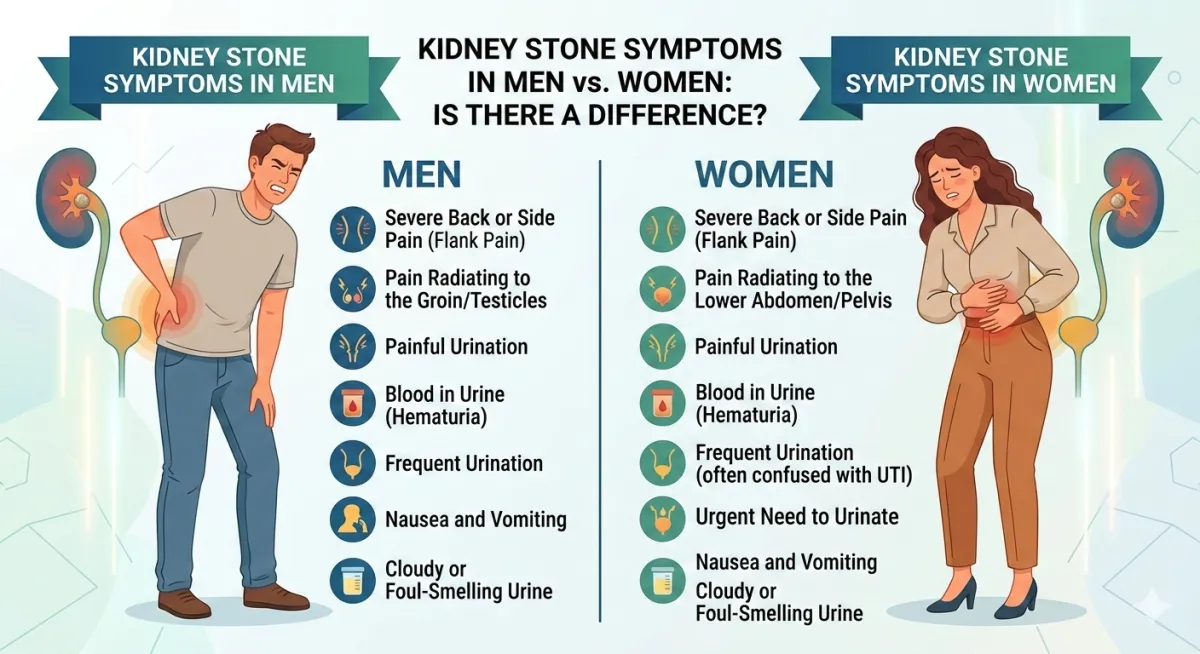
Men are more likely to develop kidney stones, although women can get them too. In men, the pain often starts in the side or lower back and may travel toward the lower abdomen, groin, or even the testicles.
Common symptoms in men may include:
Sharp pain in the lower back or side
Pain that spreads to the groin
Testicular discomfort in some cases
Difficulty sitting still because of severe pain
Blood in the urine
Painful urination
Men are also slightly more likely to develop stones earlier in adulthood.

Kidney Stone Symptoms in Women
Women can have the same symptoms as men, but the pain may sometimes feel more like pelvic cramping or lower abdominal discomfort. Because of this, kidney stones in women are sometimes confused with menstrual pain, urinary tract infections, or other pelvic issues.
Common symptoms in women may include:
Pain in the lower abdomen, side, or lower back
Pelvic pain or pressure
Burning during urination
Frequent urge to urinate
Nausea and vomiting
Blood in the urine
In some cases, the symptoms may feel similar to a bladder infection, which can make it harder to recognize a kidney stone right away.
Is There Really a Difference?
The truth is that kidney stone symptoms are mostly similar in men and women. The biggest difference is often how the pain is felt and where it is noticed.
Men may feel pain radiating into the groin or testicular area, while women may feel it more in the lower abdomen or pelvic region. Anatomy can influence how symptoms show up, but the underlying condition is the same.
So no, kidney stones do not completely change based on gender. But yes, the way symptoms are experienced can differ enough to affect how quickly someone realizes what is happening.
When to See a Doctor
Do not try to tough this one out like a hero in a bad action movie. Seek medical attention if you have:
Severe pain that does not improve
Blood in your urine
Fever or chills
Nausea or vomiting that will not stop
Trouble urinating
These signs may mean the stone is causing a blockage or infection, and that needs prompt treatment.
Final Thoughts
Kidney stones can be painful for both men and women, and the main symptoms are largely the same. The difference usually comes down to how the pain is experienced and what it may be mistaken for. Men may notice pain moving into the groin, while women may mistake the discomfort for menstrual cramps or a urinary issue.
Recognizing the signs early can help you get treatment faster and avoid complications. When in doubt, it is always better to get checked than to gamble with kidney pain. Your kidneys are not fans of drama.
For those seeking expert ultrasound services, Atlanta Ultrasound offers quick, efficient, and comprehensive scans. Our team of skilled professionals is dedicated to providing you with the clarity and care you need. Contact us today to schedule your ultrasound scan and take a decisive step towards understanding your health.
📍 Multiple locations in Metro Atlanta, GA
📞 Contact: 678-590-3300
🌐 Website: www.atlantaultrasound.com
Disclaimer: The content of this blog post, authored by a sonographer, is provided for educational and informational purposes only. It is not intended as medical advice, nor should it substitute for professional medical consultation, diagnosis, or treatment. Always seek the advice of your physician or other qualified health providers with any questions you may have regarding a medical condition or health concerns.