
Seeing Is Believing: The Benefits of Ultrasound for Patients and Providers
Breast Lump but Normal Mammogram: Why Ultrasound May Still Be Needed
Breast Lump but Normal Mammogram: Why Ultrasound May Still Be Needed
Discovering a breast lump can be unsettling. For many people, the next step is a mammogram, and when the results come back normal, there’s often a sense of relief. But that relief can sometimes be misleading. A normal mammogram does not always mean there is nothing to worry about especially if you or your provider can physically feel a lump.
This is where many people make a critical mistake: they stop investigating too early.
The truth is, when there is a noticeable change in your body, like a lump, it deserves a complete evaluation. In many cases, that includes a breast ultrasound, even when a mammogram shows no abnormalities.
Understanding the Limits of Mammograms
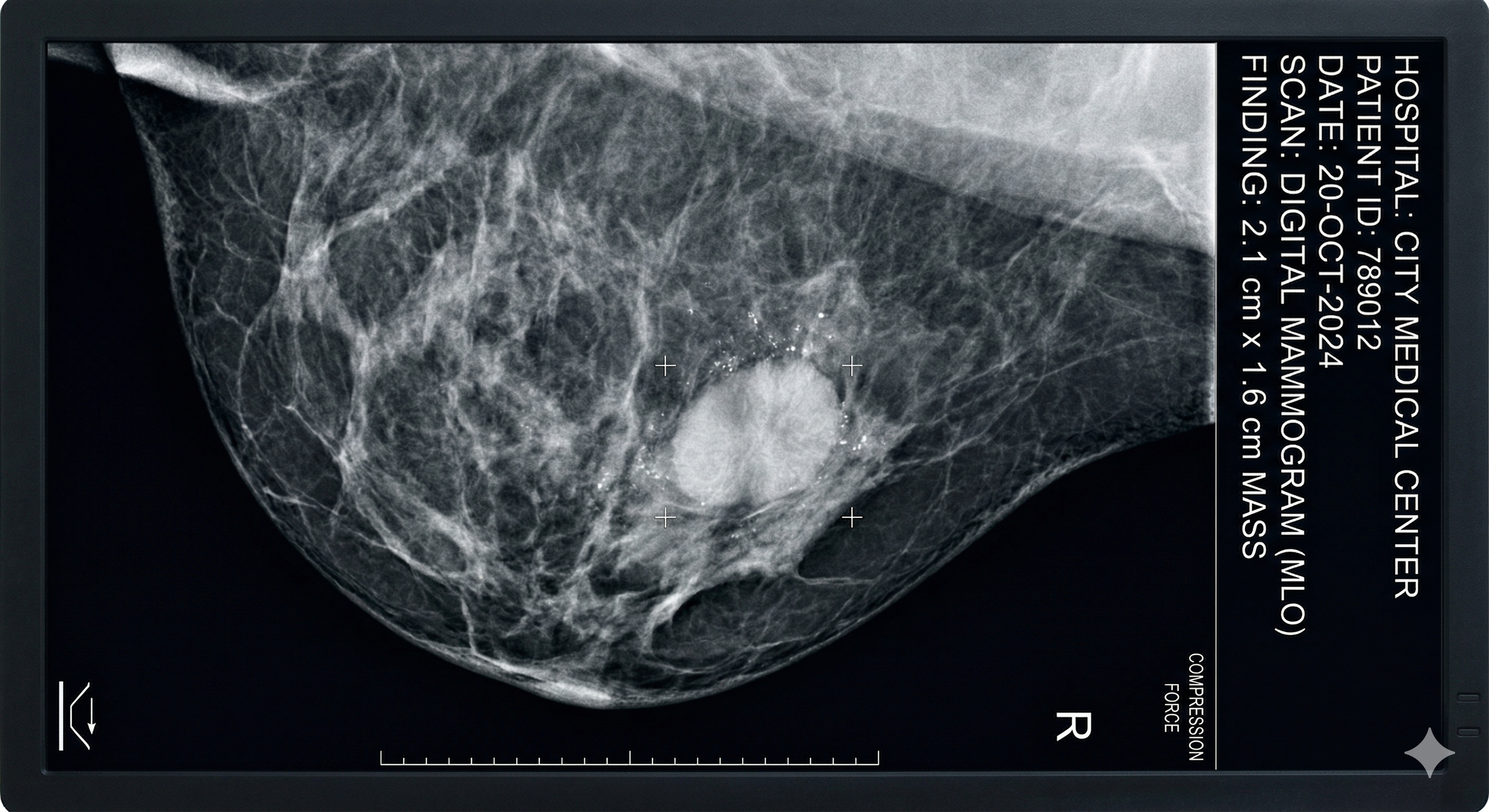
Mammograms are one of the most widely used tools for breast cancer screening. They work by using low-dose X-rays to capture images of the breast and identify unusual changes in tissue. While they are highly valuable, they are not flawless.
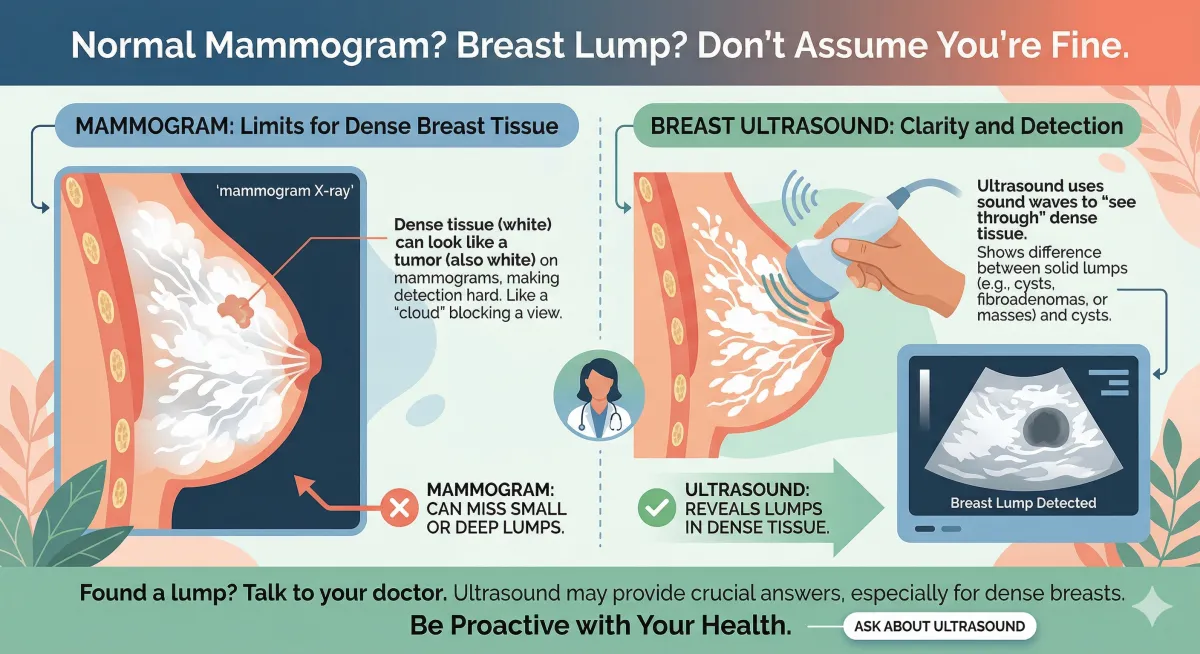
One of the biggest limitations of mammography is how it performs in dense breast tissue. Dense tissue appears white on a mammogram the same color as many abnormalities, including tumors. This makes it significantly harder to distinguish between normal tissue and something that may need further attention.
Younger individuals, in particular, are more likely to have dense breast tissue, which means a mammogram alone may not provide a complete picture. Even in less dense breasts, some lumps can be too small, too subtle, or located in areas that are difficult to capture clearly with X-ray imaging.
So when a lump is present but not visible on a mammogram, it doesn’t mean the lump isn’t real. It means the imaging method may not be the right one to detect it.
Why Ultrasound Becomes Essential
A breast ultrasound approaches imaging from a completely different angle. Instead of using radiation, it uses sound waves to create real-time images of the breast tissue. This allows providers to examine the structure of the tissue in a way that mammograms cannot.
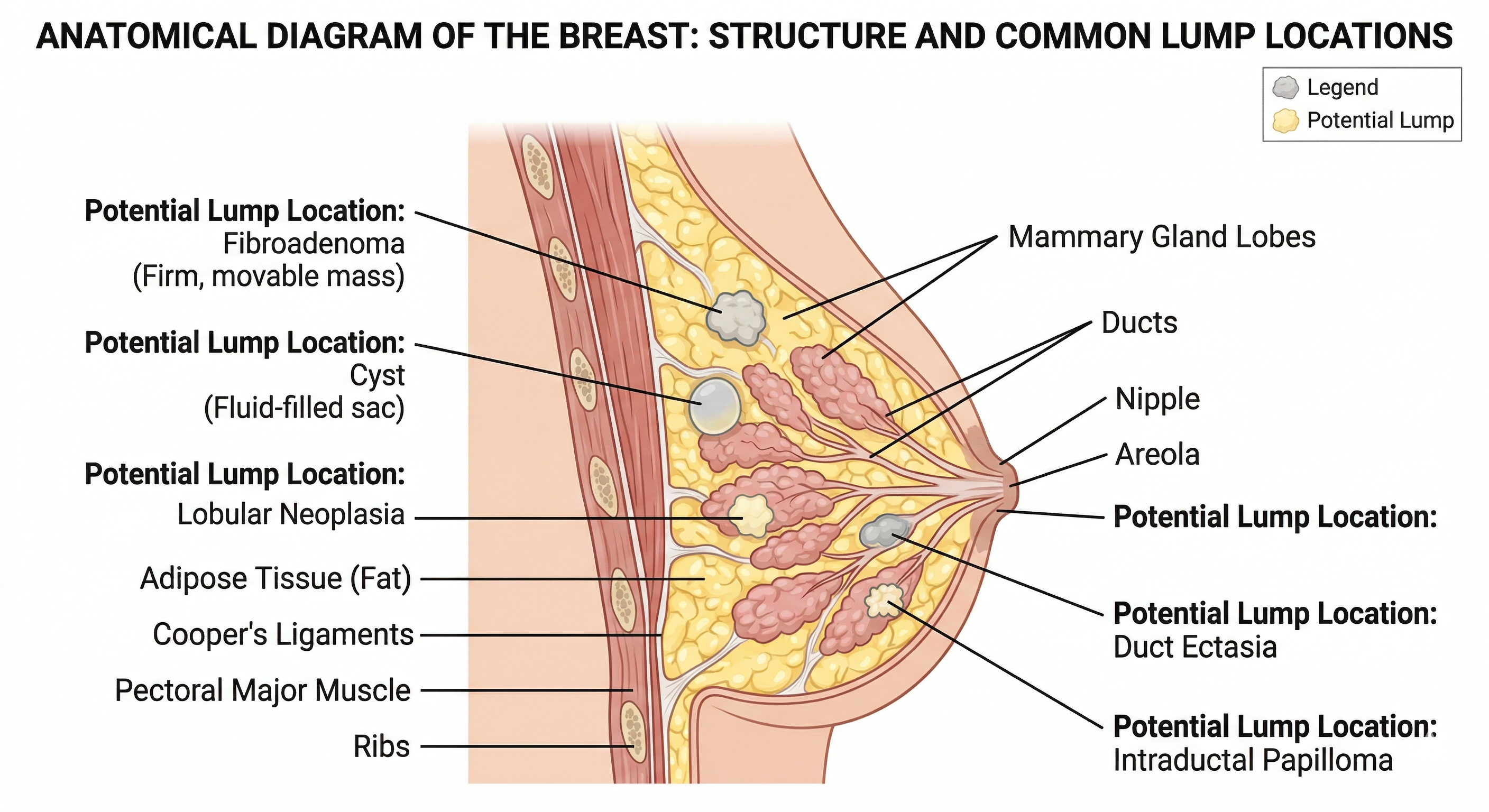
One of the most important advantages of ultrasound is its ability to differentiate between types of lumps. For example, it can clearly show whether a lump is a fluid-filled cyst or a solid mass. This distinction is critical, because cysts are often benign, while solid masses may require further evaluation.
Ultrasound is also highly effective in dense breast tissue, where mammograms struggle. Because it does not rely on X-ray contrast, it can reveal details that might otherwise remain hidden.
Another key benefit is that ultrasound can be targeted. If you feel a lump in a specific area, the scan can focus directly on that spot, ensuring that nothing is overlooked.
When a Normal Mammogram Isn’t Enough
It’s important to understand that imaging should always be guided by symptoms. If you feel a lump, that finding carries weight regardless of what a mammogram report says.
Healthcare providers often recommend a follow-up ultrasound in situations where there is a mismatch between what is felt and what is seen on imaging. This is not over-testing. It is careful, responsible care.
There are also cases where a mammogram may detect something unclear or inconclusive. In those situations, ultrasound provides additional detail that can help clarify what’s really going on.
Ignoring a lump because of a normal mammogram is not cautious—it’s risky. The goal is not to rely on a single test, but to build a complete and accurate understanding of what’s happening in the breast.
What the Ultrasound Experience Is Like
For many patients, the idea of additional testing can feel overwhelming. But a breast ultrasound is a straightforward and comfortable procedure.
You’ll lie on an exam table while a small handheld device, called a transducer, is gently moved over the area of concern. A gel is applied to the skin to help produce clear images. The process is painless and does not involve radiation or compression.
Because the imaging is done in real time, the provider can closely examine the exact area where the lump is located, making it a highly precise tool for evaluation.
The Bigger Picture: Listening to Your Body
One of the most important things to take away is this: your body is not wrong.
If you feel something unusual, it deserves attention. Too often, people second-guess themselves or delay follow-up because an initial test didn’t show anything concerning. That hesitation can lead to missed opportunities for early detection.
A normal mammogram is reassuring, but it is not definitive especially when symptoms are present. The combination of physical awareness and appropriate imaging is what leads to accurate diagnosis.
Taking the Next Step
If you’ve discovered a breast lump and your mammogram results are normal, don’t stop there. Ask about a breast ultrasound. Advocate for a complete evaluation. Make sure your concerns are fully addressed.
For those seeking expert ultrasound services, Atlanta Ultrasound offers quick, efficient, and comprehensive scans. Our team of skilled professionals is dedicated to providing you with the clarity and care you need. Contact us today to schedule your ultrasound scan and take a decisive step towards understanding your health.
📍 Multiple locations in Metro Atlanta, GA
📞 Contact: 678-590-3300
🌐 Website: www.atlantaultrasound.com
Disclaimer: The content of this blog post, authored by a sonographer, is provided for educational and informational purposes only. It is not intended as medical advice, nor should it substitute for professional medical consultation, diagnosis, or treatment. Always seek the advice of your physician or other qualified health providers with any questions you may have regarding a medical condition or health concerns.