
Seeing Is Believing: The Benefits of Ultrasound for Patients and Providers
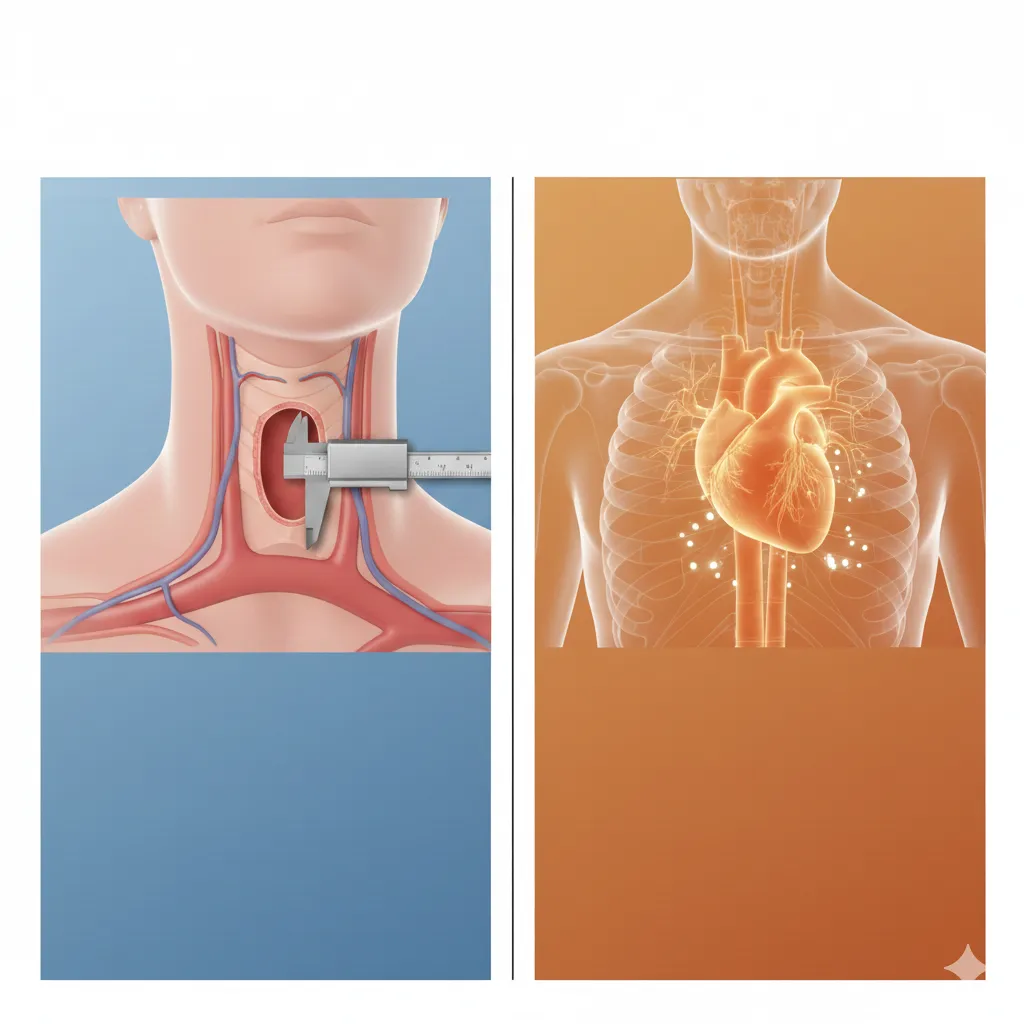
CIMT vs. Calcium Score: What Each Test Tells You (and Who They’re For)
CIMT vs. Calcium Score: What Each Test Tells You (and Who They’re For)
When your doctor says Let’s assess your heart risk, it can feel weirdly abstract. You don’t feel plaque. You don’t feel arteries aging and then you hear about two tests that sound similar but aren’t:
CIMT (Carotid Intima-Media Thickness)
Coronary Calcium Score (CAC / Calcium Score)
They’re both trying to answer a version of the same question: Is silent atherosclerosis (plaque buildup) already happening and how worried should we be?
But they do it in very different ways.
Quick snapshot
CIMT (Ultrasound of the neck arteries)
What it looks at: The carotid arteries in your neck
What it measures: Thickness of the artery wall (and sometimes plaque)
Radiation: None
Big idea: Can suggest early artery changes, sometimes before symptoms
Calcium Score / CAC (CT scan of the heart arteries)
What it looks at: The coronary arteries that feed the heart muscle
What it measures: Calcified plaque (calcium deposits) in those arteries
Radiation: Yes (low-dose CT; exposure varies by protocol)
Big idea: Directly estimates how much calcified plaque is in the heart’s arteries, and helps guide prevention decisions
What CIMT tells you (and what it doesn’t)
What it tells you
A CIMT test is an ultrasound that measures the thickness of the two inner layers of your carotid artery wall. As plaque builds over time, those layers can thicken, and that thickening can signal higher cardiovascular risk.
CIMT can be appealing because:
It’s quick and painless
It’s noninvasive and uses no radiation
It may detect early signs of atherosclerosis, sometimes before symptoms
What it doesn’t tell you
Here’s the catch: CIMT is not strongly standardized across all clinics, and major guidelines have been cautious about using CIMT routinely to predict a first heart attack or stroke in everyday clinical practice.
In fact, the 2013 ACC/AHA cardiovascular risk guideline states that CIMT is not recommended for routine measurement for risk assessment of a first ASCVD event
So CIMT is best thought of as:
A risk clue, not a definitive answer
Most useful when done in a high-quality lab with strong technique consistency
What a Calcium Score (CAC) tells you
What it tells you
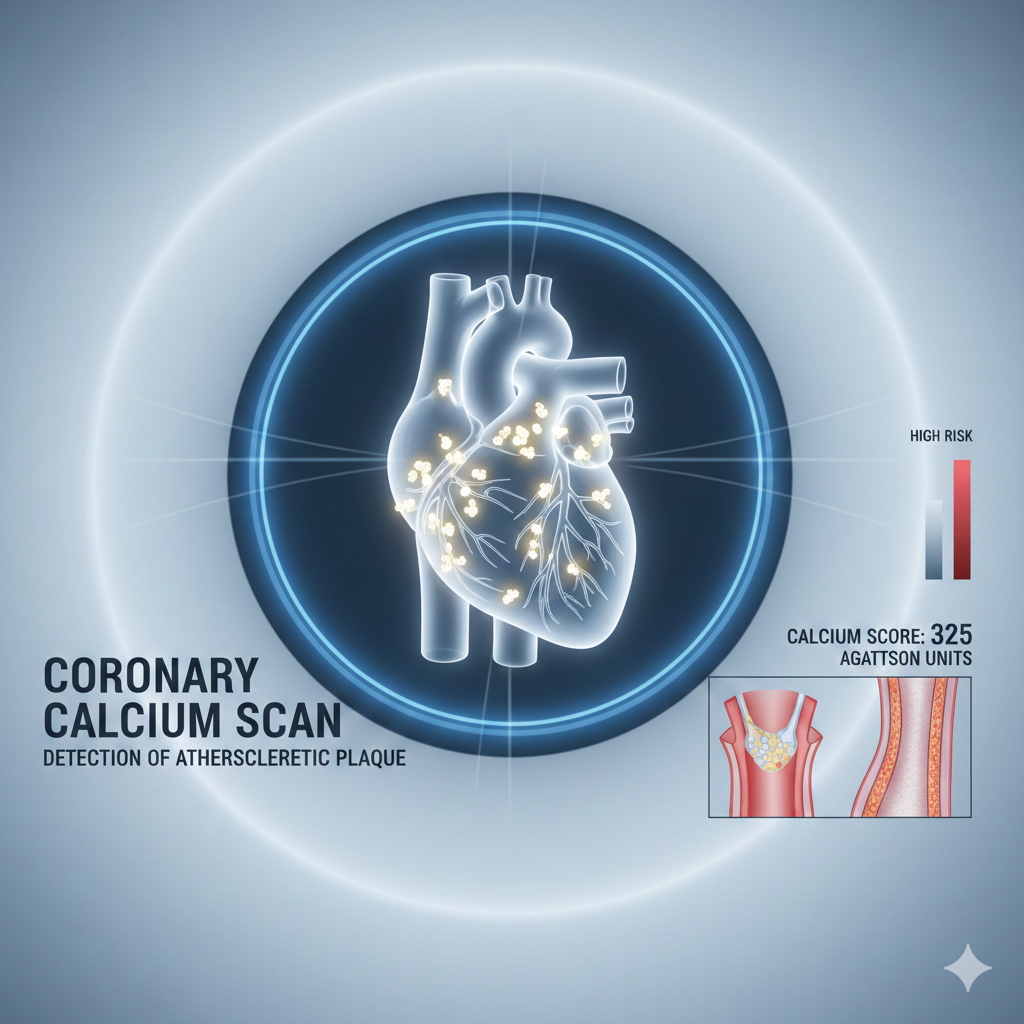
A coronary calcium scan is a special CT scan that detects calcium deposits in the coronary arteries, an indicator of atherosclerotic plaque.
This matters because calcium in coronary arteries generally means:
Atherosclerosis is present, even if you feel fine
Your clinician can refine decisions about statins and prevention strategy
Professional guidelines explicitly support CAC in the right setting: the 2018 ACC/AHA and 2021 ESC/EAS guidelines recommend CAC scoring as a tool for risk refinement in primary prevention.
Typical CAC score ranges
Cleveland Clinic describes these practical cutoffs:
0 = no detectable coronary calcium (very low near-term risk, depending on other factors)
≤ 100 = mild evidence of coronary artery disease
Up to 400 = moderate evidence
> 400 = strong evidence
What it doesn’t tell you
A calcium score:
Does not show “soft” (non-calcified) plaque, so it’s not a perfect crystal ball
Doesn’t tell you whether a specific artery is blocked
Isn’t meant for people who already have known coronary disease or symptoms, those cases need different testing
Radiation, safety, and should I worry?
CIMT: No radiation; researchers haven’t identified risks, and it’s considered safe and noninvasive.
CAC: Uses radiation. Protocols vary a lot—one study found effective dose ranges from 0.8 to 10.5 mSv depending on how the scan is done.
The American Heart Association notes the exposure is similar to a mammogram and advises discussing risks, especially with repeat exposure.
CAC is generally avoided in pregnancy.
Who each test is for
A Calcium Score (CAC) is often for people who:
Are typically 40–70 (or similar age ranges)
Have risk factors (cholesterol, blood pressure, family history, smoking history, etc.)
Are in the “middle zone” where it’s not obvious if they should start or intensify prevention meds
The AHA specifically lists groups where CAC may be useful like people unsure about statins, some older adults with few risk factors questioning benefit, and some adults 40–55 with ~5–7.5% 10-year risk plus extra risk factors.
CIMT may be considered when:
A clinician wants a radiation-free look at artery changes
You have atherosclerosis risk factors and need another piece of information
You’re evaluating vascular health in a broader way—but with the understanding that CIMT is not routinely recommended for first-event risk prediction in guidelines
Important: If the goal is to check for carotid narrowing (stenosis) because of symptoms (like mini-strokes/TIAs), that’s typically a standard carotid duplex ultrasound, not a CIMT-focused risk test.
How to choose between them
When you’re deciding, the best question isn’t Which test is better?
It’s: What decision are we trying to make with the result?
Use CAC when the decision is something like:
Do I start a statin?
Am I truly low risk, or just lucky so far?
Use CIMT when the decision is more like:
“Can we get a radiation-free signal of early vascular change?”
…while accepting that it’s not the guideline-favored tool for routine first-event prediction.
Bottom line
CAC is usually the more guideline-backed tool for refining risk when prevention decisions are uncertain.
CIMT can provide useful information and has the upside of no radiation, but it’s not recommended for routine first-event risk prediction in major ACC/AHA guidance.
For those seeking expert ultrasound services, Atlanta Ultrasound offers quick, efficient, and comprehensive scans. Our team of skilled professionals is dedicated to providing you with the clarity and care you need.
Contact us today to schedule your ultrasound scan and take a decisive step towards understanding your health.
📍 Multiple locations in Metro Atlanta, GA
📞 Contact: 678-590-3300
🌐 Website:www.atlantaultrasound.com
Disclaimer: The content of this blog post, authored by a sonographer, is provided for educational and informational purposes only. It is not intended as medical advice, nor should it substitute for professional medical consultation, diagnosis, or treatment. Always seek the advice of your physician or other qualified health providers with any questions you may have regarding a medical condition or health concerns.