Seeing Is Believing: The Benefits of Ultrasound for Patients and Providers
Silent Stroke Risk: How CIMT Helps Detect Early Artery Changes Before Symptoms
Silent Stroke Risk: How CIMT Helps Detect Early Artery Changes Before Symptoms
Strokes rarely arrive with an announcement. For many people, the first “sign” is the stroke itself. That’s the danger of silent artery damage: it develops quietly, years before symptoms appear. By the time someone feels dizziness, numbness, or speech issues, the underlying problem has usually been building for a long time.

This is where Carotid Intima-Media Thickness (CIMT) testing becomes a strategic advantage.
CIMT is not guesswork. It’s not a basic checkup. It’s a preventive imaging test that measures the thickness of the carotid artery walls—your brain’s main blood supply. When these artery walls begin to thicken, your stroke risk rises long before you feel anything unusual.
Why Silent Stroke Risk Is So Dangerous
Artery plaque grows quietly. It doesn’t cause pain. It doesn’t change your day-to-day life—until it blocks or interrupts blood flow to the brain. Many adults walk around with early arterial changes and have no idea. Traditional screenings often miss early plaque because they look for blockages, not developing arterial changes.
Silent stroke risk increases if you have:
Family history of stroke or heart disease
High blood pressure or high cholesterol
Diabetes
Smoking history
A sedentary lifestyle
Chronic stress
Most people in these categories don’t need a scare—they need early detection.
How CIMT Detects Risk Before Symptoms Appear
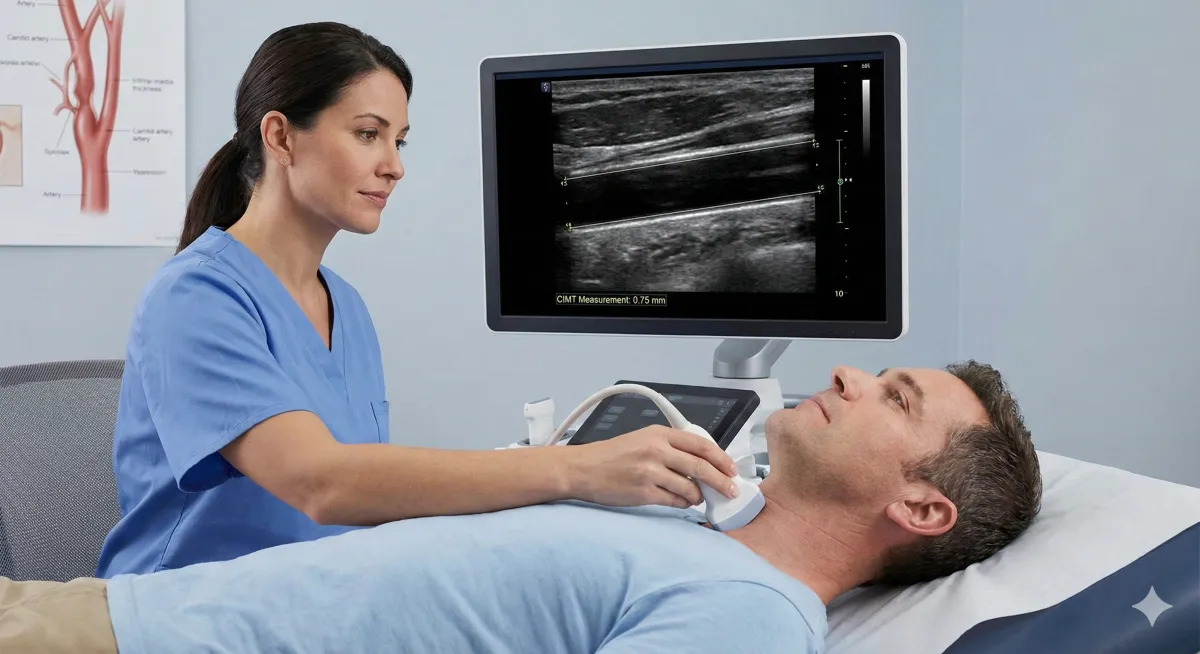
A CIMT scan uses ultrasound to identify:
Thickening of the artery wall
Early plaque formation
Structural changes in blood vessels
These findings are invisible on routine physical exams. CIMT reveals them before they turn into major cardiovascular problems.
Think of it as detecting a crack in the foundation before the house collapses.
What Makes CIMT Different from a Regular Carotid Ultrasound?
A standard carotid ultrasound checks for blockages.
CIMT checks for early structural change, which can begin decades earlier.
This gives you:
A real snapshot of what is happening inside your arteries
A measurable baseline for future comparison
Time to take action before a stroke ever becomes a threat

Why Early Detection Matters
CIMT identifies your risk when intervention is easiest and most effective. With the results, your healthcare provider can recommend:
Lifestyle changes tailored to your risk level
Medications if necessary
A monitoring plan to track artery changes over time
This isn’t reaction—it’s prevention.
Who Should Consider a CIMT Scan?
Anyone over 40 benefits, but it’s especially crucial for individuals who:
Have a family history of stroke
Have metabolic conditions (like high cholesterol or insulin resistance)
Want a deeper understanding of their cardiovascular health
Silent stroke risk doesn’t discriminate. If you’re proactive about health, CIMT should be part of your prevention strategy.
CIMT at Atlanta Ultrasound
Our CIMT scans are:
Non-invasive
Radiation-free
Completed in about 20–30 minutes
Interpreted by professionals who know how to detect early arterial changes clearly
Prevention shouldn’t wait until symptoms appear—because symptoms usually show up too late.
For those seeking expert ultrasound services, Atlanta Ultrasound offers quick, efficient, and comprehensive scans. Our team of skilled professionals is dedicated to providing you with the clarity and care you need.
Contact us today to schedule your ultrasound scan and take a decisive step towards understanding your health.
📍 Multiple locations in Metro Atlanta, GA
📞 Contact: 678-590-3300
🌐 Website:www.atlantaultrasound.com
Disclaimer: The content of this blog post, authored by a sonographer, is provided for educational and informational purposes only. It is not intended as medical advice, nor should it substitute for professional medical consultation, diagnosis, or treatment. Always seek the advice of your physician or other qualified health providers with any questions you may have regarding a medical condition or health concerns.